From 20,000 TV Stations around the globe, here are a few Islamic Channels with some important information about them.Our purpose is to make these famous Islamic channels easy to access for the public.
falling stars
Blogger templates
Bismillah Welcome Message
Friday, 7 December 2012
Baiturrahman
Mosque, Banda Aceh, Indonesia, islamic Places Pics
![]() |
| Baiturrahman Mosque, Banda Aceh, Indonesia, islamic Places Pics |
Kaaba
Makkah Wallpapers, Holy Place Makkah wallpaper pictures, Mecca wallpapers
![]() |
| Makkah-The holy place for all muslims |
Tear down the mosque and temple too, break all that divides
But do not break the human heart as it is there that ALLAH resides.
(BULLEH SHAH)
![]() |
Mecca: The Holiest City in Islam |
![]() |
| Kaba Sharif |
![]() |
| The Holiest City in The World of Islam |
![]() |
| muslim mosque makkah wallpaper |
| khana kaba |
| Makkah & Kaba Sharif , the Holy place |
I have always loved you,
As you stand before me
Still, yet wildly alive,
Remembering my childlike voice
from twenty loves ago.
We were dead
then suddenly alive.
I traveled across time
for you Mecca
My holy place,
My love.
As you stand before me
Still, yet wildly alive,
Remembering my childlike voice
from twenty loves ago.
We were dead
then suddenly alive.
I traveled across time
for you Mecca
My holy place,
My love.
( Makkah Sharif - The Holiest City in Islam )
Madina Munawara wallpapers
Jo Madina hum bhi jaate to kuch aur baat hoti
Wohi raah bhool jaate, to kuch aur baat hoti
Mein Madine ko gaya tha ye bara sharaf hai lekin
Wohi dam jo toot jata to, kuch aur baat hoti
The protector of good, all prophets seek answers at your door
The Shah of Medina, the Shah of Medina.
My wish is Madina
My heaven is Madina
Connect your heart to lovely Madina
Because no city is like Madina
Most Beautiful Islamic Mosques Wallpapers
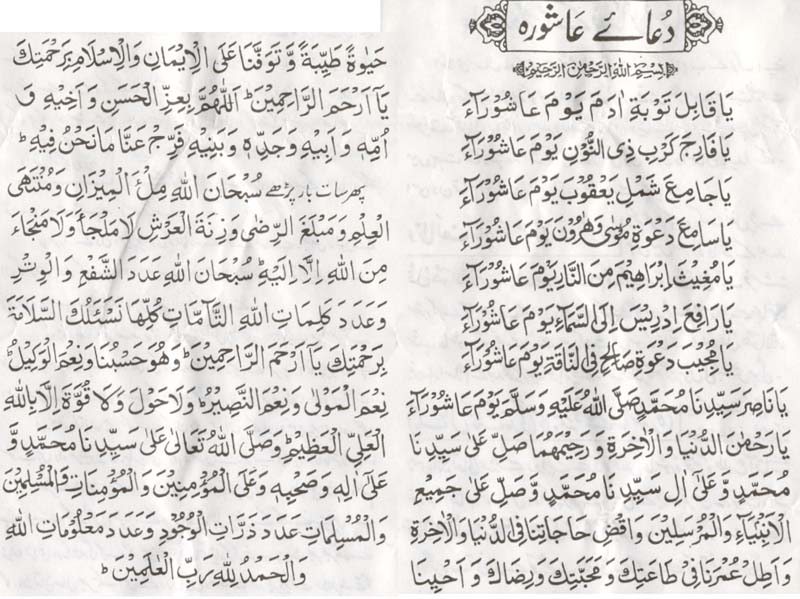
Dua
e Ashura, Moharram ul Haram Dua
Dua-e-Ashurah - An insurance for a
year’s Life
![]() |
| Dua e Ashura |
In English : Hazrat Imam Zainul Abidain (Radi Allah Anhu) reports that who ever recites this dua on the tenth of Muharram, any time after sunrise and before sunset, or listens to its recitation from someone else, Allah Ta’ala will certainly make it an insurance for a years’ life for him, by keeping death away from him. However, if one is to become the victim of death in that year, they will by some strange coincidence not remember to recite it.
In Urdu: yeh dua Bohot muharib
hai.
Hazrat Imam Zainul Abaideen (Radiallahu Ta’ala Anhu) se riwayat hai k..
Jo sakhsh Aashura E Muharram ko Tulu Aftaab se Guroob e Aftaab tak is dua [Dua e Ashura]
ko padh le ya kisi se Padhwa kar su le to Insha Allah tala'a saal bhar us ki Zindagi ka Beema ho jaae ga,
Hazrat Imam Zainul Abaideen (Radiallahu Ta’ala Anhu) se riwayat hai k..
Jo sakhsh Aashura E Muharram ko Tulu Aftaab se Guroob e Aftaab tak is dua [Dua e Ashura]
ko padh le ya kisi se Padhwa kar su le to Insha Allah tala'a saal bhar us ki Zindagi ka Beema ho jaae ga,
Islamic
Quotes about Life, Prayer For Life
" Prayer For Life
"
My dear ALLAH when
I loose hope, Help me to remember that, your love is greater than my
disappointments & your plans For my life are better than my
dreams.
Hazrat Umar (R.A)
"I looked at all friends, and did not find a better friend than safeguarding the tongue. I thought about all dresses, but did not find a better dress than piety. I thought about all types of wealth, but did not find a better wealth than contentment in little. I thought of all types of good deeds, but did not find a better deed than offering good advice. I looked at all types of sustenance, but did not find a better sustenance than patience."
The
Importance Of Friday, Significance of Jumma in Islam
The Importance
Of Friday | Significance of Jumma in Islam The Virtues and Sunnah's of
Jummah
![]() |
| Image of The Day of Jumma Significance By Prophet Mohammad (P.B.U.H) |
Imam Bukhari and Muslim reported that Prophet
Mohammad (P.B.U.H) had said, "We (Muslims) came last and yet we are the
first on the day of judgment. They have received the books before us (meaning
Torah and Injil). We have received the book after them (meaning the Qur’an).
Friday was their day to be glorified. However, they disputed on that while Allah
had told us Friday is the day to glorify. Thus they will follow us. The Jews
glorify Saturday, and the Christians glorify Sunday."
By Sheikh Amin Abu Anas
The Friday prayer (Juma’ah Salat) is very important for each Muslim, male and female,
because it is their weekly Salat and it is a blessing that Allah bestowed on the people of
Muhammad (SAW).
Also reported by Imam Muslim, Abo-Dawod, Al-Nesaii, and Al-Termithi, that Prophet Mohammad (P.B.U.H) had said, "The best day during which the sun have risen is Friday. It is the Day Adam was created. It is the day when Adam entered paradise and also when he was taken out from it. It is also the day on which the day of judgment takes place."
By Sheikh Amin Abu Anas
The Friday prayer (Juma’ah Salat) is very important for each Muslim, male and female,
because it is their weekly Salat and it is a blessing that Allah bestowed on the people of
Muhammad (SAW).
Also reported by Imam Muslim, Abo-Dawod, Al-Nesaii, and Al-Termithi, that Prophet Mohammad (P.B.U.H) had said, "The best day during which the sun have risen is Friday. It is the Day Adam was created. It is the day when Adam entered paradise and also when he was taken out from it. It is also the day on which the day of judgment takes place."
Rasulallah (P.B.U.H) is Reported to have
said, “Recite Durood upon me in abundance on the day of Jummah since they are
presented to me.” (Ibn Majah)
BEAUTIFUL SAYING OF HAZRAT MUHAMMAD
(P.B.U.H)
“The best of
friends is he who is best in behavior and character.“
...
“He who wishes
to enter Paradise must please his father and mother.“
...
“Whoever loves
to meet God, God loves to meet him.“
...
“God is not
merciful to him who is not so to humankind. He who is not kind to God“s creation
and to his own children, God will not be kind to him.“
...
...
Sadqa
(charity) jab apne malik ke hath se nikalta hai to
Uss waqt 5 jumley kehta hai
1. Main faani maal tha tu nay mujhe baqa di
2. Main tera dushman tha ab tu nay mujhe apna dost bana liya
3. Aaj say pehlay tu meri hifazat karta tha
ab mein teri hifazat karoun ga
4. Main haqeer tha tu nay mujhe azeem bana diya
5. Pehlay mein tere hath mein tha ab mein khuda ke haath mein hun
Prophet Muhammad PBUH
Uss waqt 5 jumley kehta hai
1. Main faani maal tha tu nay mujhe baqa di
2. Main tera dushman tha ab tu nay mujhe apna dost bana liya
3. Aaj say pehlay tu meri hifazat karta tha
ab mein teri hifazat karoun ga
4. Main haqeer tha tu nay mujhe azeem bana diya
5. Pehlay mein tere hath mein tha ab mein khuda ke haath mein hun
Prophet Muhammad PBUH
Reverence Of Mothers In Islam
Salaam and peace, all – 
For the past few years, I’ve written about my mother on Mother’s Day. While I could write a book about her, I’ll mention just a few points about motherhood from the Qur’aan and sunnah/traditions of Prophet Muhammad (pbuh).
Did you know?
Believe it or not, some Islamic scholars have argued that Muslims already have built-in Mother’s Day (everyday), and should not celebrate it once a year or like ‘Eid (and that it may even hurt the feelings of those without mothers). Others have argued that because mothers have such a high status in Islam, it should not be ignored on Mother’s Day. Frankly, I’m pretty sure what Prophet Muhammad (saws) would do, considering the circumstances in the West, but God knows best.
May God preserve the well-being of our mothers who are with us, have mercy on those who have passed, and help us learn the true meaning of mercy.
For the past few years, I’ve written about my mother on Mother’s Day. While I could write a book about her, I’ll mention just a few points about motherhood from the Qur’aan and sunnah/traditions of Prophet Muhammad (pbuh).
Did you know?
- The word for the womb in Arabic (rahm) has the same root as the word for mercy (rahma). God is often referred to as “Ar-Rahmaan” (the Oft-Merciful) in the Qur’aan and commands Muslims to keep the ties of kinship.
- Mothers are held in a somewhat higher regard than fathers in Islam. Yep, we love our Dads to pieces. But mothers? They’re on a whoooole different level. A companion of Prophet Muhammad (pbuh) once narrated: “A man once came to Prophet Muhammad (pbuh) and said, ‘O Messenger of God, who among the people is most deserving of my kindness/companionship?’ He said, ‘Your mother.’ The man asked, ‘Then who?’ He said, ‘Your mother.’ He asked, then who?’ He said, ‘Your mother.’ He asked, ‘Then who?’ He said, ‘Your father.’” In another tradition, it is reported that he told one of his companions that Paradise is at the feet of the mothers.
- The Qur’aan mentions having reverence to God and our parents. Meaning, they have such a high place in Islam, that God mentions them right after His name. This doesn’t mean they’re on the same level (to be worshipped), but it does mean they’re meant to be honored and respected. “Be thankful to Me and to your parents, unto Me is the final destination.”[Qur'aan 31:14]
- Keeping close ties and respecting our mother is a command from God, no matter what religion she’s on. One of the greatest sins in Islam (besides polytheism, murder, injustice, oppression, bearing false witness, etc.) is disobeying our parents. The only time we should not obey them, according to Islamic teachings, is when they command us to do something clearly wrong or heretical. Outside of this, respect and honor is the default. “Your Lord has decreed that you worship none but Him and that you be kind to parents. Whether one or both of them attain old age in your life, say not to them a word of contempt, nor repel them, but address them in terms of honor. And out of kindness, lower to them the wing of humility and say, ‘My Lord! Bestow on them Your Mercy even as they cherished me in childhood.’” [Qur'aan 17:23-24] It was narrated that Asma’ bint Abi Bakr (the prophet’s sister-in-law) said: “My mother came to visit me at the time of the Messenger of God (pbuh) while she was a polytheist. I consulted the Messenger of God (pbuh), saying, ‘My mother has come to visit me for some purpose. Should I uphold ties of kinship with her?’ He said, ‘Yes, uphold ties of kinship with your mother.’”
- If our parents reach old age, it is part of our duty to take care of them. A man once asked a companion of the prophet if he would be rewarded by God for tending to his elderly mother. He told him this was an obligation (i.e., you owe her more than that just for the contractions you caused). “And We have enjoined on man to be dutiful and kind to his parents. His mother bears him with hardship. And she brings him forth with hardship…” [Qur'aan 46:15]
- Even after death, Muslims are taught to pray for their forgiveness, to keep the ties of kinship, to treat their parents’ friends and family well, and to make sure their debts and obligations are paid up. It was reported from one of the prophet’s companions that a woman from Juhaynah came to the prophet (pbuh) and said: “My mother vowed to go for Hajj, but she died before she did so. Can I perform Hajj on her behalf?” He said, “Yes, perform Hajj on her behalf. Do you not think that if your mother owed a debt that you would pay it off for her? Fulfil her debt to God, for God is more deserving that what is owed to Him should be paid.”
Believe it or not, some Islamic scholars have argued that Muslims already have built-in Mother’s Day (everyday), and should not celebrate it once a year or like ‘Eid (and that it may even hurt the feelings of those without mothers). Others have argued that because mothers have such a high status in Islam, it should not be ignored on Mother’s Day. Frankly, I’m pretty sure what Prophet Muhammad (saws) would do, considering the circumstances in the West, but God knows best.
May God preserve the well-being of our mothers who are with us, have mercy on those who have passed, and help us learn the true meaning of mercy.
Three Questions at atime
The following questions relate to the second theme of the Qur’aan (Akhlaaq: Good Manners and Responsibilities Towards Others). It deserves more attention than I can give it, simply because it’s a key part of Islamic teachings. Prophet Muhammad (pbuh) is reported to have said: “I have (only) been sent to teach/perfect/complete noble manners.” Keep in mind: I am not a scholar, so I’ll let Islamic texts speak for themselves. Also, these are Islamic guidelines for your information, not laws meant to be enforced upon anyone.
16. What is a Muslim’s obligation towards God?
Because Islam is based upon both faith and action, the Qur’aan and the Sunnah (traditions of the Prophet) mention guidelines for various relationships, including: man-God, man-other creation, and man-self.
Our responsibility toward God:
- Iman (belief) and Tawheed (oneness of God): “Say, He is God, One (Unique). God, the Eternal, the Absolute. He begets not, nor is He begotten, and there is none like unto Him.” (Qur’aan: 112) “And verily We have raised in every nation a messenger (proclaiming): Serve God and shun false idols/gods.” (16:36)
- Ibaadah (worship of God). “There is no messenger that We have sent before you but We have revealed to him, ‘There is no God except Me. So worship Me.” (21:25)
- Taqwaa (God-consciousness, mindfulness and awareness): “O believers: Have taqwaa of God and believe in His messenger. He (God) will give you a double portion of His mercy and will appoint for you a light wherein you shall walk, and He will forgive you. God is Forgiving, Merciful.” (57:28)
The default moral code is respect, peace and mercy to all (Muslim or not). Peace is the yearned for ideal, and we ask God for peace in our greetings and in our prayers. War is not a normal or even liked state/condition, but is allowed under strict conditions in Islam in order to return to a more free/just society. Vigilanteism is not accepted in Islam (i.e., random individuals claiming to be leaders who declare war on other states/individuals).
Our relations towards others:
- Parents: “Your Lord has decreed that you worship none but Him, and be kind to your parents. Whether one or more attain old age in your life, say not to them a word of contempt nor repel them, but address them in terms of honor. And out of kindness, lower to them the wing of humility and say, ‘My Lord! bestow on them Thy Mercy, as they cherished me in childhood.’” (Quran 17: 23-24)
- Spouses: “And among His signs is this, that He created for you spouses from among yourselves that you may dwell in tranquillity with them, and He has put love and mercy between your hearts. Verily in that are signs for those who reflect.” (30:21) “They are your garments and you are their garments…” (Qur’aan 2:187). “The best of you are those who are best to your wives.” – Prophet Muhammad
- Children: “And do not kill your children out of fear of poverty. I shall provide for them and for you, too…” [17:31] and “He who does not love children or honor the elderly is not one of us.” and “Every one of you (people) is a shepherd. And every one is responsible for whatever falls under his responsibility. A man is like a shepherd of his own family, and he is responsible for them.” and “It is sufficient sin for a man if he neglects those on whom he is obliged to spend.” - sayings of Prophet Muhammad.
- Neighbors: “Serve God, and join not any partners with Him; and do good to parents, kinsfolk, orphans, those in need, neighbors who are near, neighbors who are strangers, the companion by your side, the wayfarer, your dependents: For God loves not the arrogant, the vainglorious.” [4:36] “He has not complete faith, who eats to his satisfaction and sleeps comfortably at night while his neighbor goes hungry.” – Prophet Muhammad
- General Population: “O mankind! We created you from a single soul, male and female, and made you into nations and tribes, so that you may come to know one another. Truly, the most honored of you in the sight of God is the greatest of you in piety (taqwaa). God is All-Knowing, All Aware” (49:13) And “Keep in mind! All of humanity is from Adam, and Adam was fashioned from dust. An Arab has no superiority over a non-Arab, nor does a non-Arab have any superiority over an Arab; a white has no superiority over black, nor does a black have any superiority over a white; [none have superiority over another] except by piety and good action.” and “Harm no one so that no one may harm you.” - sayings of Prophet Muhammad.
- Muslims: “The believers, men and women, are protectors of one another. They enjoin the good and forbid evil, they observe regular prayers, pay charity, and obey God and His Messenger. On them will God pour His mercy: for God is Exalted in power, Wise.” (9:71), and “You do not have complete faith until you want for your brother what you want for yourself.” - Prophet Muhammad
- People of the Book and non-Muslims: “We believe in God, and in what has been revealed to us and what was revealed to Abraham, Isma’il, Isaac, Jacob, and the Tribes, and in (the Books) given to Moses, Jesus, and the prophets, from their Lord: We make no distinction between one and another among them, and to God do we submit.” [3:84], and “And dispute ye not with the People of the Book except with means better (than mere disputation) unless it be with those of them who inflict wrong (and injury): but say “We believe in the Revelation which has come down to us and in that which came down to you; Our God and your God is one; and it is to Him that we submit.” [29:46] And “Beware! Whoever is cruel and hard on a non-Muslim minority, curtails their rights, burdens them with more than they can bear, or takes anything from them against their free will; I (Prophet Muhammad) will complain against the person on the Day of Judgment.” – Prophet Muhammad.
- Environment/Animals: “And seek not mischief/corruption in the land. Indeed, God does not like mischief-makers/corruptors.” [28:77] “And there is no creature on (or within) the earth or a bird that flies with its wings except that they are nations (communities) like you.” [6:38] Also, the Prophet was asked: “Messenger of God, are we rewarded for kindness towards animals?” He said, “There is a reward for kindness to every living thing.”
- Those who bother, mock or annoy: “And the servants of the Beneficent God are those who walk on the earth in humbleness, and when the ignorant address them, they say: Peace.” [25:63]
- Against enemies in war (which is naturally allowed when attacked for self-defense, when a peace treaty is broken, or to defend others from tyranny): “Fight in the cause of God against those who fight you, but do not transgress limits. God does not love transgressors.” (2:190), and “If they seek peace, then seek you peace. And trust in God for He is the One that hears and knows all things.” (8:61), and “Had God not checked one set of people by means of another, the earth would indeed have been full of mischief; but God is full of bounty to all the worlds” (2:251), and “If any one slew a person – unless it be for murder or for spreading mischief in the land – it would be as if he slew the whole people.” (5:32) and “God forbids you not, with regards to those who fight you not for [your] faith nor drive you out of your homes, from dealing kindly and justly with them; for God loves those who are just.” (60:8)
- To value our life and what God gave us, and to work for what is best in this life and the next:
- “I have prepared for My righteous servants what no eye has ever seen and no ear has ever heard, nor has it occurred to any human heart.” - Sacred Hadith
- “Do you think that We have created you with no purpose, and that you will not be returned to Us? The true Sovereign is too exalted above that.” (23:115-116)
- “Indeed, in the creation of the heavens and the earth and the alternation of the night and the day are signs for those of understanding, who remember God while standing or sitting or [lying] on their sides and give thought to the creation of the heavens and the earth, [saying], “Our Lord, You did not create this aimlessly; exalted are You [above such a thing]; so protect us from the punishment of the Fire.” [3:189-191].
- To be patient when tested to earn more of His Grace:
- “Assuredly We will try/test you with something of danger and hunger and loss of some worldly goods, and of lives and the fruits of your labor. But give glad tidings to those who are patient in adversity–those who, when calamity befalls them, say, ‘Truly, to God we belong and, truly, to Him we shall return.’” [ 2:155-156]
- “Iman (faith) is to believe in God, His angels, His messengers, His books, The Day of Judgment, and in the Divine Decree, the good and the bad (of it), the bitter and the sweet (of it).” - Prophet Muhammad
- To seek truth, understanding, and guidance:
- “Do they not think deeply about themselves? God has not created the heavens and the earth and all that is between them except with truth and for an appointed term.” [30:8]
- “Seeking knowledge is an obligation upon every Muslim.” – Prophet Muhammad
- “Praise be to God, Lord of the Worlds, the Most Merciful, the Most Compassionate, the Master of the Day of Judgment. To You do we worship, and to You do we ask for help. Guide us to the straight path – the path of those upon whom You have bestowed favors, not of those against whom You are angry, nor of those who are astray.” [1:1-7]
- To value our life and what God gave us, and to work for what is best in this life and the next:
Even a Smile is a charity
What do you think of when you hear “charity”?
Giving to the poor, right?
That’s the standard, and there are various rulings for zakaat (obligatory charity) in Islamic law, but there’s another category of extra charity that brings one closer to God (called “sadaqah”), for which an interesting story comes to mind:
One day, a group of poor Muslims (most of the early ones were, but there were some wealthy ones, too) came to Prophet Muhammad (peace be upon him), who himself chose to be one of the poor because of their special status with God. They were apparently despondent and asked: “O Messenger of God, the rich have taken all the rewards! They pray like we pray, they fast like we fast, and they give in charity from their extra wealth (which they could not do).”
He said: “Has not God made things/acts for you to do in charity? Verily, every tasbeeh (glorification of God/SubhaanAllah), every takbeer (exhaulting God/Allahu Akbar), every tahmeedah (praising God/Alhamdulillah), every tahleelah (unification of God, Laa ilaaha ill Allah), every ordering of good, every forbidding of evil…is a charitable act.”
In related hadiths/sayings, he said:
“Your smiling at your brother (or sister) is a charitable act. Your ordering good and eradicating evil is charity. Your guiding a man who is lost in the land is a charity. Your helping the man who is weak in sight to see is a charity. Your removing a stone, thorn or bone from the road is a charity. Your emptying your cup into the cup of your brother is a charitable act.”
The early Muslims were overjoyed at this news, and although they knew the rich could easily do the same, the message conveyed so much more:
- Good deeds go beyond obligatory acts of worship
- Charity goes beyond wealth; even the poor can give in charity!
- Remembrance of God is the peak of goodness, since it sets the stage for other acts
- Helping others is an integral part of our faith: without it, our faith is incomplete.
- If even a smile is charity, we may be greedy when we don’t!
Small deeds mean so much. Psychologists now know the effects of smiling for both the one who smiles, and the one being smiled at. Amazing.
If that wasn’t enough to make them happy, the prophet even said (on a separate occasion):
“Keep your evil (deeds) away/safe from the people, and that will be a charitable act from yourself for yourself (and them).”
Most beautiful last words of Hazrat Mohammad(S.A.W)
Most beautifull Last words of the last prophet Hazrat Muhammad (PBUH)
Suddenly, there was a person, he said salaam.
'May I come in?' he asked.
But Fatimah did not allow him enter the room.
'I'm sorry, my father is ill,' said Fatimah, turned her body back
and closed the door.
She went back to her father who had opened his eyes and asked
Fatimah,
'Who was he, my daughter?'
'I don't know, my father. It was the first time for me to see
him,'
Fatimah said gently.
Then, Rasulullah looked at his daughter with trembled look, as if he
wanted to reminisce about every part of her daughter's face.
'Know one thing! He is who erases the temporary pleasure; he is who
separates the companionship in the world.
He is the death angel,' said Rasulullah .
Fatimah bore the bomb of her cry. The death angel came toward him,
But
Rasulullah asked why Jibril did not come along with him.
Then, Jibril was called. Jibril was ready in the sky to welcome the
soul of Habibullah and the leader of the earth.
'O Jibril, explain me about my rights in front of ALLAH?' Rasulullah
asked with a weakest voice.
'The doors of sky have opened, the angels are waiting for your
soul.'
'All jannats open widely waiting for you,' Jibril said.
But, in fact, all this did not make Rasulullah relieved, his eyes
were still full of worry.
'You are not happy to hear this news?' asked Jibril.
'Tell me about the destiny of my people in future?'
'Don't worry, O Rasul ALLAH. I heard ALLAH tell me: 'I make jannat
haram for every one, except the people of Muhammad who are inside
it,' Jibril said.
It became closer and closer, the time for Malaekat Izrail to do his
work.
Slowly, Rasulullah's soul was pulled. It was seemed that the body of
Rasulullah was full of sweat; the nerves of his neck became tight.
'Jibril, how painful this sakaratul maut is!'
Rasulullah uttered a groan slowly. Fatimah closed her eyes, Ali sat
beside her bowed deeply and Jibril turned his face back.
'Am I repugnant to you that you turn your face back o Jibril?'
Rasulullah asked the Deliverer of Wahy.
'Who is the one who could see the Habibullah in his condition of
sakaratul maut,' Jibril said.
Not for a while, Rasulullah uttered a groan because of unbearable
pain.
'O ALLAH, how great is this sakaratul maut. Give me all these pains,
don't give it to my people.'
The body of Rasulullah became cold, his feet and chest did not move
anymore..
His lips vibrated as if he wanted to say something, Ali took his ear
close to Rasulullah.
'Uushiikum bis shalati, wa maa malakat aimanuku - take care of the
saalat and take care the weak people among you.'
Outside the room, there were cries shouted each other, sahabah held
each other. Fatimah closed her face with her hands and, again, Ali
took his ear close to Rasulullah's mouth which became bluish.
'Ummatii, ummatii, ummatii?' - 'My people, my people, my
people.'
And the life of the noble man ended.
Could we love each other like him? Allahumma sholli 'ala Muhammad wa
baarikwa salim 'alaihi. How deep is Rasulullah's love to us.
Shia vs Sunni Namaz
Sunni and Shia Namaz or salat differ from each other on the basis of actions and words involved. Sunni Muslims follow various interpretations by different schools of laws whereas Shia Muslims follow different legal traditions. Sunni Muslims follow Hanbli, Hanfi, Malikii and Shafi schools of thought whereas Shia Muslims follow Jaafri Madhhab.
Shia Muslims pray three times a day as they join two salats such as Maghrib and Isha salat together whereas Sunni Muslims pray five times a day. The two salats combined by Shia Mulsims are called the Maghrebain. Shia Muslims use a plank of wood or a hard tablet made of clay from karbala to rest their heads during prostration whereas Sunni Muslims touch their heads directly to the floor.
The other differences between Shia and Sunni salat include the position of their hands. Sunni Muslims fold their arms whereas Shia Muslims do not find it valid to fold arms during salat. There are also differences in the Athan or prayer call such as Sunni Muslims add ‘AL-SALATU KHAYRUN MINA NAWM’ in the Fajar Athan whereas Shia Muslims add ‘HAYYA ALA KHAYR AL-’AMAL.’ It is a must or Wajib for Shia to say ‘Khayr al amaal’ whereas Sunni Muslims do not consider it a must since it was stopped at the order of caliph Omar. Shia and Sunni Muslims both regard Athan as a Sunah, near Wajib or it is a must.
‘Nawm’ is a must for Sunni Athan but Shia Muslims do not say it because it was not said at the time of Prophet Muhammad and Omar. The caliph introduced it during his times. Some of the other differences between Shia and Sunni namaz are the use of word Amen. Amen is a Hebrew word and Shia scholars do not consider it Wajib whereas Sunni Muslims say amen after Surah Fatiha during namaz. Amen is a compulsory word to say after Surah Fatiha for Sunni Muslims. Shia Muslims read complete Surah or verses of Quran after Surah Fatiha whereas Sunni Muslims are not bound to read the whole Surah. They may read only a few verses or just one verse from any where in the Quran after Surah Fatiha.
There are also many other minor differences between the Shia and Sunni namaz as mentioned above. Sunni Muslims point their fingers or rotate these in circles during namaz whereas Shia Muslims do not and then Shia sit comfortably on the folded feet whereas Sunni sit on twisted foot and so on.
Summary:
1. Shia Muslims pray three times a day and combine Maghrib and Isha salat whereas Sunni Muslims pray five times a day.
2. Sunni Muslims fold their arms whereas Shia Muslims do not fold their arms during namaz.
3. Shia Muslims add ‘Khayr al amaal’ whereas Sunni Muslims add ‘Nawm.’
4. Sunni Muslims touch their heads to the ground whereas Shia Muslims use a wooden block or tablet of clay to rest their heads during prostration.
5. Shia Muslim scholars prohibit the use of word Amen during the namaz whereas Sunni Muslims consider it as a must.
Read more: Difference Between Shia and Sunni Namaz | Difference Between | Shia vs Sunni Namaz http://www.differencebetween.net/miscellaneous/difference-between-shia-and-sunni-namaz/#ixzz2F7ZsIttx
Thursday, 6 December 2012
Islam and
Media
The Media age of television, cinema, satellite and computer has made this world more accessible and information more available. The ‘1960s’ brought change to the whole world with marketing and commercialisation through television. However in the last fifteen years, there has been the growth of the multi-media age driven through the Internet. Today the news, views and opinions can be telecast through the globe with colour, sound and power. This has benefited us and also harmed us in equal proportion, it has been used and abused in equal measure.
Lifestyle and taste are controlled largely by media perceptions and propaganda is sold as the truth. All great leaders have used the media for self-promotion and have often manipulated situations to build profiles leading to widespread support and gain. The reality of the media world is simply that if it isn’t being shown or sold, then it doesn’t exist.
The rise of Islam in the great age of the Prophet (saw) came through conveying the message in the only medium available of the day. The Seerah - Life and times of our Prophet (saw) portrays how the people of Makkah were invited to Islam by the moral and pious conduct of the Prophet (saw) and by his rightly guided followers. The melodious and inspiring recitation of the Qur’an also changed the hearts of even the most fiercest opponents as many mediums were used to make the non-believers aware of the truth of this divine Message. The Prophet (saw) lived the life of the Qur’an and was tested to show the non-believers the exalted position of Allah’s (swt) religion. The Prophet (saw) also sent his messengers on horseback to the rulers and kings of the neighbouring lands with scripts declaring his Prophethood and inviting them to Islam.
The late and great Sheikh Ahmed Deedat wrote in his book ‘Al-Qur’an-The Miracle of all Miracles’ how the Prophet (saw) appealed to the people of previous books (Jews and Christians) by reciting ayats from the Qur’an, which told the stories of Moses(as) and Jesus(as). This was also using the mediums of communication and appeal to portray a message. We must realise that the beloved Prophet (saw) is the perfect role model, the one who is the advertisement of the Qur’an and Islam and as the famous nasheed singer Sami Yusuf explained that the Prophet (saw) was the greatest celebrity.
This choice of term may offend some but if we reflect on his example and status, it is obvious. We should follow his way, by being like him and copying him to attain complete faith. Even in the time of the Prophet (saw) people would travel far just to meet this man in Arabia who called himself a Prophet. Hasrat Abuzar Ghifari (ra), a great Sahabi-companion travelled across the lands just to meet Prophet Muhammad (saw). He had no idea where to find him, he slept on the street and even risked his life in Pagan territory.
A man who will enter Paradise
One day the Prophet Peace be upon him looked at a man and said: Whoever likes to look at a man who will enter Paradise, let him look at this man.
Abdullah Ibn Abbas, who was present and heard this comment, followed the man who was favoured with this promise. He asked his permission to be his guest which the man accepted.
After observing him for three consecutive nights, without seeing anything extraordinary about him, Abdullah Ibn Abbas said: I don’t see anything about you which qualifies you to enter Paradise more than the rest of us. Can you remember one special thing you do of which I may not be aware.
After thinking for sometime the man said: Nothing is outstanding in my life except one thing, may be, that I go to bed with a pure and sound heart towards my friends (meaning to forgive others of their bad qualities and to think good of everybody).
Then Ibn Abbas exclaimed: This is exactly what qualifies you to enter paradise.
“Luminaries of Islam”
One day the Prophet Peace be upon him looked at a man and said: Whoever likes to look at a man who will enter Paradise, let him look at this man.
Abdullah Ibn Abbas, who was present and heard this comment, followed the man who was favoured with this promise. He asked his permission to be his guest which the man accepted.
After observing him for three consecutive nights, without seeing anything extraordinary about him, Abdullah Ibn Abbas said: I don’t see anything about you which qualifies you to enter Paradise more than the rest of us. Can you remember one special thing you do of which I may not be aware.
After thinking for sometime the man said: Nothing is outstanding in my life except one thing, may be, that I go to bed with a pure and sound heart towards my friends (meaning to forgive others of their bad qualities and to think good of everybody).
Then Ibn Abbas exclaimed: This is exactly what qualifies you to enter paradise.
“Luminaries of Islam”
GOLDEN PERIOD OF MUSLIM
UMMAH
Narrated Ibrahim bin Sad from his father from his
grand-father:
Abdur Rahman bin Auf said, "When we came to
Medina as emigrants, Allah's Apostle established a bond of brotherhood between
me and Sad bin Ar-Rabi'. Sad bin Ar-Rabi' said (to me), 'I am the richest among
the Ansar, so I will give you half of my wealth and you may look at my two wives
and whichever of the two you may choose I will divorce her, and when she has
completed the prescribed period (before marriage) you may marry her.'
Abdur-Rahman replied, "I am not in need of all that. Is there any market-place
where trade is practiced?' He replied, "The market of Qainuqa." Abdur-Rahman
went to that market the following day and brought some dried butter-milk
(yogurt) and butter, and then he continued going there regularly. Few days
later, 'AbdurRahman came having traces of yellow (scent) on his body. Allah's
Apostle asked him whether he had got married. He replied in the affirmative. The
Prophet said, 'Whom have you married?' He replied, 'A woman from the Ansar.'
Then the Prophet asked, 'How much did you pay her?' He replied, '(I gave her) a
gold piece equal in weigh to a date stone (or a date stone of gold)! The Prophet
said, 'Give a Walima (wedding banquet) even if with one sheep .' "
(Sahih Bukhari,
Volume 3, Book 34, Number 264)
Dealing with the LOST-Found Things
Narrated Zaid bin Khalid Al-Juhani:
A bedouin went to the Prophet and asked him about picking up a lost thing. The Prophet said, "Make public announcement about it for one year. Remember the description of its container and the string with which it is tied; and if somebody comes and claims it and describes it correctly, (give it to him); otherwise, utilize it." He said, "O Allah's Apostle! What about a lost sheep?" The Prophet said, "It is for you, for your brother (i.e. its owner), or for the wolf." He further asked, "What about a lost camel?" On that the face of the Prophet became red (with anger) and said, "You have nothing to do with it, as it has its feet, its water reserve and can reach places of water and drink, and eat trees."
(Sahih
Bukhari Volume 3, Book 42, Number 609)
Pillars of Islam
Narrated Talha bin 'Ubaid-Ullah:
A bedouin with unkempt hair came to Allah's Apostle and said, "O Allah's Apostle! Inform me what Allah has made compulsory for me as regards the prayers." He replied: "You have to offer perfectly the five compulsory prayers in a day and night (24 hours), unless you want to pray Nawafil." The bedouin further asked, "Inform me what Allah has made compulsory for me as regards fasting." He replied, "You have to fast during the whole month of Ramadan, unless you want to fast more as Nawafil." The bedouin further asked, "Tell me how much Zakat Allah has enjoined on me." Thus, Allah's Apostle informed him about all the rules (i.e. fundamentals) of Islam. The bedouin then said, "By Him Who has honored you, I will neither perform any Nawafil nor will I decrease what Allah has enjoined on me. Allah's Apostle said, "If he is saying the truth, he will succeed (or he will be granted Paradise)."
(Sahih Bukhari Volume 3, Book 31, Number 115)
Tuesday, 4 December 2012
Wives of the Holy Prophet
(Ummhat-ul-Mumineen)
1. SAYYADAH KHADIJAH (RADI ALLAHU ANHA)
This noble lady belonged to the Quraish tribe. She is also known as "Khatijatul Kubra" or "Khadijah the Great."
Sayyiduna Rasulullah (sallal laahu alaihi wasallam) married her when he was 25 years old and she was 40 years old. She was a very devoted wife, companion and councillor, ever ready to stand by Sayyiduna Rasulullah (sallal laahu alaihi wasallam) in all trials and tribulations. She proved to be an immense support and help to the Cause of Islam. She passed away at the age of 65 years on the 11th of Ramadaan - 10 years after the first revelation. Sayyiduna Rasulullah (sallal laahu alaihi wasallam) has said about her: "The noblest women of the world are Sayyadah Mariam (alaihis salaam) and Sayyadah Khadijah (radi Allahu anha)." (Bukhari Shareef)
2. SAYYADAH SA'UDA (RADI ALLAHU ANHA)
Sayyadah Sa'uda (radi Allahu anha) was a widow and the daughter of Sayyadah Zama (radi Allahu anhu). She married Sayyiduna Rasulullah (sallal laahu alaihi wasallam) after Sayyadah Khadijah (radi Allahu anha) had passed away. Sayyiduna Rasulullah (sallal laahu alaihi wasallam) was then 55 years old.
She was generous, affectionate and kind. The reason for his marriage was that he needed someone to care for his children so that he could concentrate on the heavy responsibilities of Prophethood. Sayyadah Aisha Siddique (radi Allahu anha) has said about her: "It is only Sa'uda, on seeing whom, I wish my soul lived in her body." Sayyadah Sa'uda (radi Allahu anha) passed away in 55 A.H
3. SAYYADAH AISHA SIDDIQUE (RADI ALLAHU ANHA)
She was the daughter of Sayyiduna Abu Bakr (radi Allahu anhu) and was unmarried. In the 10th year of the mission, Sayyiduna Rasulullah (sallal laahu alaihi wasallam) married her. Since she was very young at the time of her marriage, she only began to live with him in Madinatul Munawwarah in 2 A.H. He married Sayyadah Aisha Siddique (radi Allahu anha) in order to strengthen the ties of friendship with Sayyiduna Abu Bakr (radi Allahu anhu), his closest friend and also so that she could teach other women.
Sayyadah Aisha (radi Allahu anha) led a very simple life without comfort and luxury. She dressed very simple. She served Sayyiduna Rasulullah (sallal laahu alaihi wasallam) with utmost devotion and he loved her very much. She led a very pious life.
When Sayyiduna Rasulullah (sallal laahu alaihi wasallam) passed away, she was 25 years old. Thereafter, she lived for another 48 years and saw the rule of all the four Khulafaa.
She is remembered for her intelligence, intuition, her knowledge of Hadith and principles of religion, secrets of Islamic knowledge, Arabic literature, piety and Islamic Fiqh. She became a great Madani (person of Madinatul Munawwarah) scholar and knew several thousand Ahadith by heart. Sayyiduna Rasulullah (sallal laahu alaihi wasallam) himself used to teach her and answer her questions. She used to also teach other women. A great Scholar, Imam Zahri (radi Allahu anhu), has said about her: "Sayyadah Aisha (radi Allahu anha's) knowledge will surpass the knowledge of all the males and Mothers of the Faithful put together."
4. SAYYADAH HAFSA (RADI ALLAHU ANHA)
She was the daughter of Sayyiduna Umar (radi Allahu anhu) and was a widow. In 2 or 3 A.H. Sayyiduna Rasulullah (sallal laahu alaihi wasallam) married her. He also gave his own daughter, Sayyadah Umm Kulthum (radi Allahu anha), in marriage to Sayyiduna 'Uthman (radi Allahu anhu).
She was a very learned person and spent most of her time in reading and writing. Sayyiduna Rasulullah (sallal laahu alaihi wasallam) had personally taught her with the result that she was an authority on Islamic knowledge. She was also given the original hand-written copy of the Holy Quran to keep. She was very pious and saintly. She passed away in the month of Shabaan 45 A.H.
5. SAYYADAH ZAYNAB (RADI ALLAHU ANHA)
She was the daughter of Khuzaimah. She was a widow and was poverty stricken. Moved by her piety and self-sacrifice, Sayyiduna Rasulullah (sallal laahu alaihi wasallam) married her in 3 A.H. Sayyadah Zaynab (radi Allahu anha) was a very kind-hearted lady and ever ready to help the poor and destitute. She would spend all her income on charity and was called"Ummul Masaakin" or "Mother of the Poor." She passed away within three months of her marriage and was buried in Jannatul Baqi.
6. SAYYADAH UMME SALMAH (RADI ALLAHU ANHA)
She was the daughter of Abu Ummayyah Sohail. When her husband passed away she was left with four children and had no means of maintenance. Sayyiduna Rasulullah (sallal laahu alaihi wasallam), now 57 years old, married her in the month of Shawwal in 4 A.H.
She was very beautiful and used to live a very pious life. She did all kinds of good works. She was very learned and had a good knowledge of Hadith. She was able to teach others on Islamic matters. She read the Holy Quran in the same style as Sayyiduna Rasulullah (sallal laahu alaihi wasallam). She was almost as learned as Sayyadah Aisha (radi Allahu anha). She outlived all the Ummahaatul Mu'mineen and passed away at the age of 84 years in 63 A.H.
7. SAYYADAH ZAINAB (RADI ALLAHU ANHA)
She was the daughter of Jahsh bin Rabah and married Sayyiduna Zaid bin Harith (radi Allahu anhu), the adopted son of Sayyiduna Rasulullah (sallal laahu alaihi wasallam). After her divorce, she married Sayyiduna Rasulullah (sallal laahu alaihi wasallam) in 5 A.H., when he was 58 years old.
Her marriage to Sayyiduna Zaid (radi Allahu anhu) was a lesson to all not to distinguish between a free person and a slave in social matters. She was very generous to the poor people of Madinatul Munawwarah. She passed away at the age of 53 years in 20 A.H. and lies buried in Jannatul Baqi. When she passed away, Sayyadah Aisha (radi Allahu anha) said about her: "Alas, the pious respected lady is no more and has left the orphans and widows broken-hearted."
8. SAYYADAH JUWAIRIYAH (RADI ALLAHU ANHA) She was the daughter of Harith and was a widow. She was a captive of war and set free by Sayyiduna Rasulullah (sallal laahu alaihi wasallam) who married her in 5 A.H. As a result of her marriage, the prisoners which belonged to her tribe were set free. This made many accept Islam.
Sayyadah Juwairiyah (radi Allahu anha) was a highly self-respecting person. She was very religious-minded and spent most of her time in Salaah. She was also very learned. She passed away at the age of 65 years in 56 A.H. and lies buried in Jannatul Baqi.
9. SAYYADAH UMME HABIBAH (RADI ALLAHU ANHA)
She was the daughter of Sayyiduna Abu Sufyaan (radi Allahu anhu) and a widow. Sayyiduna Rasulullah (sallal laahu alaihi wasallam) married her when she was 36-37 years old in 6-7 A.H. This marriage also resulted in Sayyiduna Khalid bin Walid (radi Allahu anhu) accepting Islam.
She was a dedicated wife and feared Almighty Allah much. She had much regard for the poor, down-trodden and destitute and prayed a lot for the Muslims. She passed away at the age of 73 in 44 A.H.
10. SAYYADAH SAFIYAH (RADI ALLAHU ANHA)
She was a Jewess and taken captive during the Battle of Khaibar. Sayyiduna Rasulullah (sallal laahu alaihi wasallam) married her in 7 A.H. This made a great impact on the Jews, with the result that many accepted Islam.
She was very dignified in her behaviour, patient and polite. She was very much attached to Sayyiduna Rasulullah (sallal laahu alaihi wasallam) and he had great regards for her. She was also very generous and kind-hearted. She was also very learned. She passed away at the age of 50 and is buried in Jannatul Baqi.
11. SAYYADAH MAYMUNA (RADI ALLAHU ANHA)
She was a widow. Sayyiduna Rasulullah (sallal laahu alaihi wasallam) married her in the month of Shawwal when she was 51 years old. Her marriage also drew many towards Islam. She was very pious and humble and fond of advising Muslim women and freeing slaves. She was also very learned. She passed away in 51 A.H.
12. SAYYADAH MARIA QIBTIYA (RADI ALLAHU ANHA)
She was given to Sayyiduna Rasulullah (sallal laahu alaihi wasallam) as a gift by the Christian King of Egypt. She accepted Islam and was very pious. Her marriage also improved the relationship with the Egyptians. She passed away 5 years after her son passed away and is buried in Jannatul Baqi.
Subscribe to:
Posts (Atom)
Popular Posts
-
Bermuda Triangle Theories Here are the top ten theories that attempt to explain the mystery behind the Bermuda Triangle. 1) Pir...
-
Islam Channel Headquarter of Islam TV is situated in Central London . Islam Channel provides current affairs, alternative ne...
-
Makkah Wallpapers, Holy Place Makkah wallpaper pictures, Mecca wallpapers Makkah-The holy place for all muslims Tear down the...
-
Shia vs Sunni Namaz Sunni and Shia Namaz or salat differ from each other on the basis of actions and words involved. Sunni Muslims fo...
-
Ahlulbayt Television Ahlulbayt Television Network is the first and on exclusively English-...
-
The Umayyad Mosque, Damascus, Mosques of the World, Beautiful Masjids The Umayyad Mosque, Damascus, Mosques of the World, Beauti...
-
Watch Hadi TV Live Hadi TV is an International television channel with a Shia religious focus, producing programs mainly focusing on t...
-
The Omayad Mosque, Most Beautiful Masjids in The World The Omayad Mosque, Most Beautiful Masjids in The World